Caravaggio
"When there is no energy there is not color, no form and no life".Caravaggio
Discover the Artist Behind the Masterpieces
Follow in the footsteps of Caravaggio and discover the extraordinary story of the artist who revolutionized painting and transformed the way light, drama, and human emotion were represented.
Michelangelo Merisi da Caravaggio arrived in Rome in the early 1590s and remained there until 1606. During these years, he developed his revolutionary style, characterized by dramatic contrasts of light and shadow, striking realism, and an unprecedented ability to bring sacred stories into the world of ordinary people.
Our experience begins at San Luigi dei Francesi, the national church of France in Rome, where you will encounter three of Caravaggio’s most celebrated masterpieces dedicated to the life of Saint Matthew: The Calling of Saint Matthew, Saint Matthew and the Angel, and The Martyrdom of Saint Matthew.
These paintings reveal the extraordinary evolution of Caravaggio’s style—from the revolutionary realism of The Calling of Saint Matthew, where a sacred event unfolds in an almost ordinary Roman setting, to the dramatic intensity of The Martyrdom of Saint Matthew.
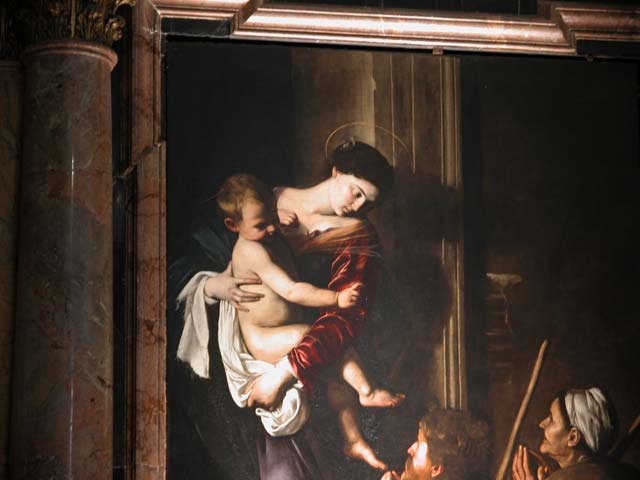
We then continue to the church of Sant’Agostino, home to the magnificent Madonna of Loreto, also known as the Madonna of the Pilgrims. Caravaggio portrayed the Virgin in an unexpectedly human and intimate way, transforming a sacred encounter into a deeply emotional moment.
But this experience goes beyond the masterpieces.
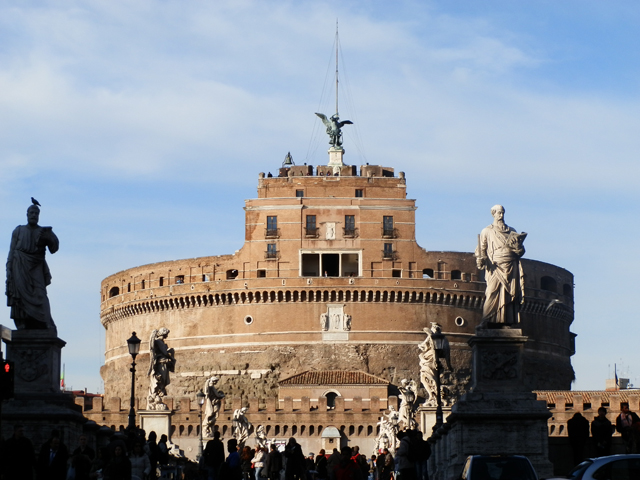
As we move through the historic streets of Campo Marzio, you will discover the places and streets where Caravaggio lived, worked, socialized, and became involved in the dramatic events that shaped his years in Rome. Here, the story of the artist becomes inseparable from the story of the city he knew—a world of taverns, artists, patrons, rivalries, and constant danger.
This is more than an art tour. It is a journey into Caravaggio’s Rome—a city of extraordinary beauty, raw humanity, ambition, and intrigue, seen through the eyes of one of the most revolutionary artists in the history of Western art.
Duration:3 hours
Info:closing times of the churches 12,30 p.m./16,00 p.m.