Castel Sant'Angelo
The fortress of the PopesCastel Sant’Angelo
From Imperial Mausoleum to Papal Fortress
Step inside one of Rome’s most fascinating monuments and discover nearly 2,000 years of history, where emperors, popes, prisoners, and soldiers have all left their mark.
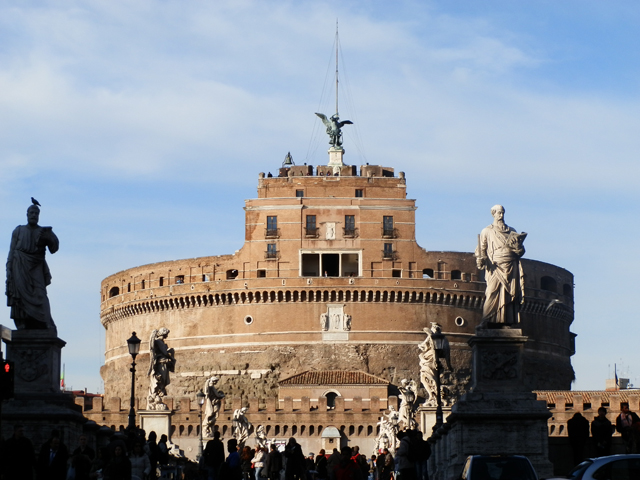
Standing majestically on the banks of the Tiber River, Castel Sant’Angelo was originally built in the 2nd century AD as the monumental mausoleum of Emperor Hadrian and his family. Over the centuries, its purpose changed dramatically. The mausoleum became a powerful fortress, a prison, and eventually a luxurious papal residence, reflecting the turbulent political history of Rome.
One of its most fascinating features is the Passetto di Borgo, the fortified passageway connecting Castel Sant’Angelo with the Vatican. Built in the Middle Ages and strengthened over the centuries, it provided the popes with a secure route to the fortress—and, in times of danger, a crucial escape route.
Inside the castle, you can explore the monumental spiral ramp of Hadrian’s original mausoleum, Renaissance apartments decorated with elegant frescoes by artists from Raphael’s circle, and dramatic rooms that reveal the lives of the powerful figures who once sought refuge within its walls.
At the top of the fortress, spectacular terraces offer panoramic views across Rome, from the Vatican and St. Peter’s Basilica to the Tiber and the historic city center.
The castle’s name comes from the bronze statue of an angel that crowns the monument. According to a medieval legend, during a devastating plague in Rome in AD 590, Pope Gregory the Great saw an angel above the mausoleum sheathing his sword—a divine sign that the plague was coming to an end.
Castel Sant’Angelo is more than a monument—it is a journey through Rome’s imperial, medieval, and papal past, filled with power, intrigue, legends, and unforgettable views.
Duration:2 hours
Info: Monday closed